The “Do–Re–Mi” song from The Sound of Music is a simple way to introduce the musical alphabet: A to G. On a piano, the white keys represent these notes, while the black keys are sharps and flats (the notes in between).
In the key of C, the major scale follows the familiar pattern:
Do–Re–Mi–Fa–Sol–La–Ti–Do = C–D–E–F–G–A–B–C.
Keeping the pattern
To start a major scale on a different note, you must keep the same pattern of intervals (gaps between notes). This often requires sharps or flats.
- D major: D–E–F#–G–A–B–C#–D
- F major: F–G–A–Bb–C–D–E–F
- B major: B–C#–D#–E–F#–G#–A#–B
Each uses a different combination of black keys to preserve the same sound.
Intervals
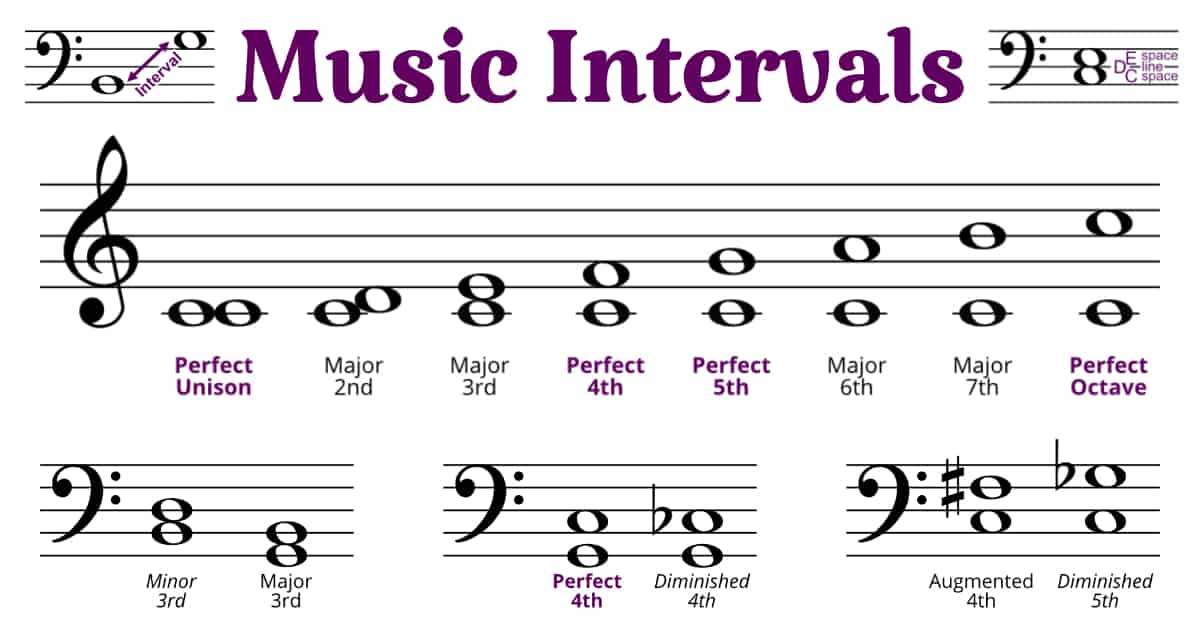
An interval is the distance between two notes. The simplest example is an octave—from one note to the next of the same name (e.g. C to C).
Intervals are named by how far apart the notes are:
- 2nd (Do–Re)
- 3rd (Do–Mi)
- up to 8th (octave)
They can also be:
- Major (larger)
- Minor (slightly smaller)
- Perfect (neutral, e.g. octave)
Recognising intervals
Melodies use intervals in many combinations, not just stepwise scales. A few familiar examples:
- Semitone (minor 2nd): Jaws theme (E–F)
- Major 2nd: “Happy Birthday” (Do–Re up), Mary Had a Little Lamb (descending)
- Minor 3rd: “So Long, Farewell” (up), Frosty the Snowman (down)
- Octave: “Somewhere Over the Rainbow” (opening leap)
The tritone (e.g. F to B) creates strong tension and is widely used across genres.
Unison
If everyone sings or plays the same note, there is no interval—this is called unison.
Here’s a nice cheatsheet for musical intervals. This one from mastering.com:
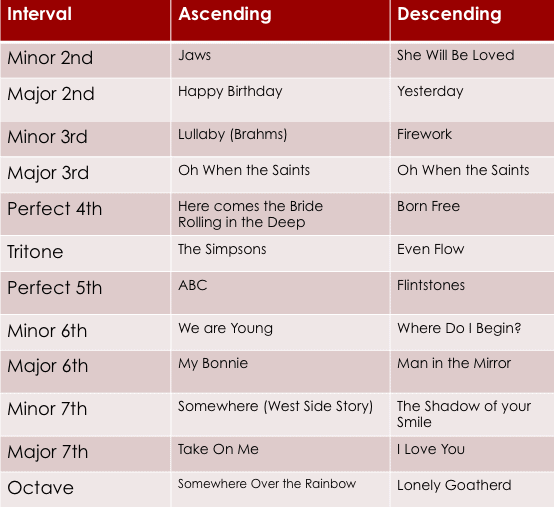
A PDF version of another cheatsheet can be found here. The one below is from anneku.com

If some of those tunes aren’t familiar, then a quick search for musical interval cheatsheet will bring up similar charts with lots of other examples.
Here’s a quick summary in musical notation of the various intervals, from musicandtheory.com